
Robotics Market Enters New Era of Growth, Driven by AI and Automation
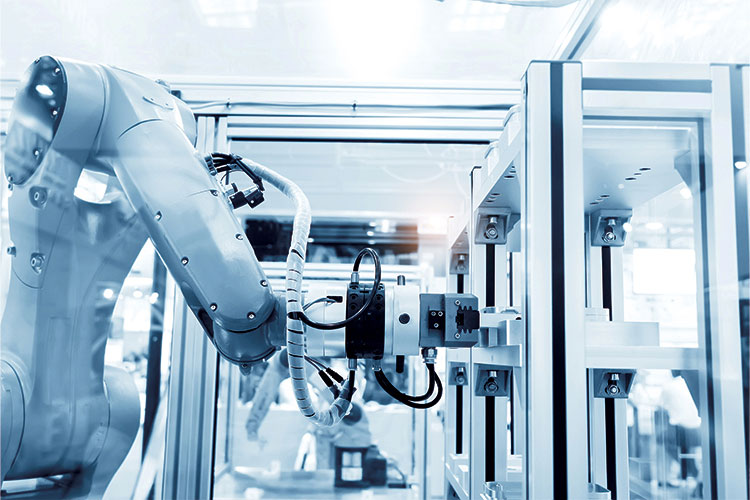
The global robotics industry is transforming as automation becomes essential for economic growth and productivity. Once limited to factories, robots now serve in healthcare, logistics, agriculture, and daily life. This marks a major shift in how work is done across industries.
Market Projections and Key Growth Drivers
According to research, the robotics market is set to expand significantly by 2033. This growth is driven by advances in AI and machine learning, labor shortages, and supportive government policies. These factors make automation a strategic necessity for businesses worldwide.
The Evolution from Simple Machines to Intelligent Systems
Modern robots are intelligent systems capable of perception and adaptive learning. Industrial robots dominate sectors like automotive and electronics, enhancing precision and safety. Collaborative robots (cobots) are also rising, enabling safe human-robot interaction, especially in SMEs.
The Rapid Expansion of Service Robotics
Service robotics is growing fast in healthcare, logistics, and agriculture. Medical robots assist in surgery and rehabilitation, while logistics robots optimize warehouse operations. Industry 4.0 integrates these systems with data analytics for smarter operations.

Macroeconomic Factors Accelerating Adoption
Labor shortages and rising wages are pushing companies toward automation. Governments are encouraging adoption through funding and incentives, particularly for small and medium-sized enterprises (SMEs). This policy support is crucial for market expansion.
Core Drivers: Demand, Applications, and Technology
Businesses use robots to improve accuracy and efficiency across expanding applications. Technological advances in AI and sensors make robots more capable and affordable, lowering barriers to entry for various industries.
Persistent Challenges in the Market
High initial investment costs remain a barrier, especially for smaller businesses. Developing robots for safe, intuitive human interaction in dynamic environments is also an ongoing technical challenge for the industry.
Regional Market Insights: A Global Perspective
United States: A leader in robotics innovation, with strong adoption in automotive and healthcare. Recent major investments by companies like FANUC reinforce market growth.
United Kingdom: Shows steady growth supported by AI advancements, though regulatory factors influence pace.
China: The world’s largest market for industrial robots, driven by national manufacturing initiatives.
United Arab Emirates: Experiencing rapid growth supported by national strategies focused on smart cities and AI.
Market Segmentation and Industrial Applications
The robotics market divides into industrial robotics (automotive, electronics, metals, food) and service robotics (logistics, medical, agriculture). Each segment addresses specific operational needs and efficiency goals.
Leading Companies Shaping the Industry
Key players include KUKA, iRobot, Intuitive Surgical, Panasonic, FANUC, ABB, and Stryker. These companies drive innovation through advanced products and strategic investments in automation technology.

Strategic Outlook for Automation Integration
The integration of robotics with control systems and factory automation platforms is crucial. Modern facilities use PLC and DCS systems to manage robotic workflows, ensuring synchronization and data coherence across operations.
Author’s Insight: The Convergence of Robotics and Industrial Automation
We are witnessing the convergence of robotics with traditional industrial control systems. This synergy creates cyber-physical production systems where robots become intelligent nodes within a larger automated ecosystem. For engineers, this means mastering both robotic programming and integration with plant-wide DCS and PLC networks. The future lies in interoperable systems where robots, machines, and human operators collaborate through shared data environments.
Practical Implementation Scenarios
Scenario 1: Automotive Assembly Line
Robotic arms equipped with vision systems perform precise welding and assembly. These robots are integrated with the factory’s PLC system, allowing real-time production adjustment and quality monitoring.
Scenario 2: Smart Warehouse Logistics
Autonomous mobile robots (AMRs) navigate warehouses, moving goods between stations. They interface with the warehouse management system, which is typically governed by higher-level control systems for inventory and workflow optimization.
Scenario 3: Precision Agriculture
Agricultural robots perform planting and harvesting with millimeter accuracy. These systems use sensor data processed through onboard controllers, often communicating with farm-wide monitoring DCS for resource management.
Frequently Asked Questions (FAQs)
1. What is the main difference between industrial robots and collaborative robots (cobots)?
Industrial robots typically operate in isolated zones for heavy, high-speed tasks, while cobots are designed to work safely alongside humans, often without safety cages, and are easier to program for varied tasks.
2. How do robots integrate with existing factory automation systems?
Robots connect via standard industrial communication protocols (like Ethernet/IP, PROFINET) to the plant’s central PLC or DCS. This allows them to receive commands, report status, and synchronize with conveyors and other machines.
3. What role do PLCs and DCS play in a robotic workcell?
A PLC often acts as the cell controller, sequencing the robot’s tasks with peripheral equipment. A DCS may oversee multiple robotic cells across a plant, coordinating production schedules and aggregating performance data.
4. Are robotics solutions only feasible for large corporations?
No. With the advent of affordable cobots and modular automation platforms, SMEs can now implement scalable robotic solutions. Many providers offer financing and targeted applications for smaller batch production.
5. What is the biggest operational challenge after installing robots?
Beyond maintenance, the key challenge is workforce integration—training staff to program, operate, and troubleshoot the systems, and re-designing workflows to fully leverage the robot’s capabilities alongside human workers.
For expert consultation on robotics and industrial automation solutions:
Email: sales@nex-auto.com
Phone: +86 153 9242 9628
 No products in the cart.