
Siemens Unveils Autonomous AI Agents to Revolutionize Industrial Automation
Siemens is fundamentally redefining industrial AI. At Automate 2025, the company announced a strategic expansion beyond its Industrial Copilot assistants. The new vision: a future powered by autonomous AI agents that proactively execute complete workflows, aiming to boost customer productivity by up to 50%.
From Assistants to Autonomous Agents: A Strategic Shift
Siemens is transitioning from reactive AI assistants to proactive, autonomous agents. This new architecture features a central orchestrator that deploys specialized agents—like a master craftsman with a sophisticated toolbox. These agents understand intent, learn continuously, and collaborate to solve complex problems across the entire industrial value chain. Crucially, users maintain full control, delegating only the tasks they choose.
Architecting an Ecosystem: The Power of Orchestration
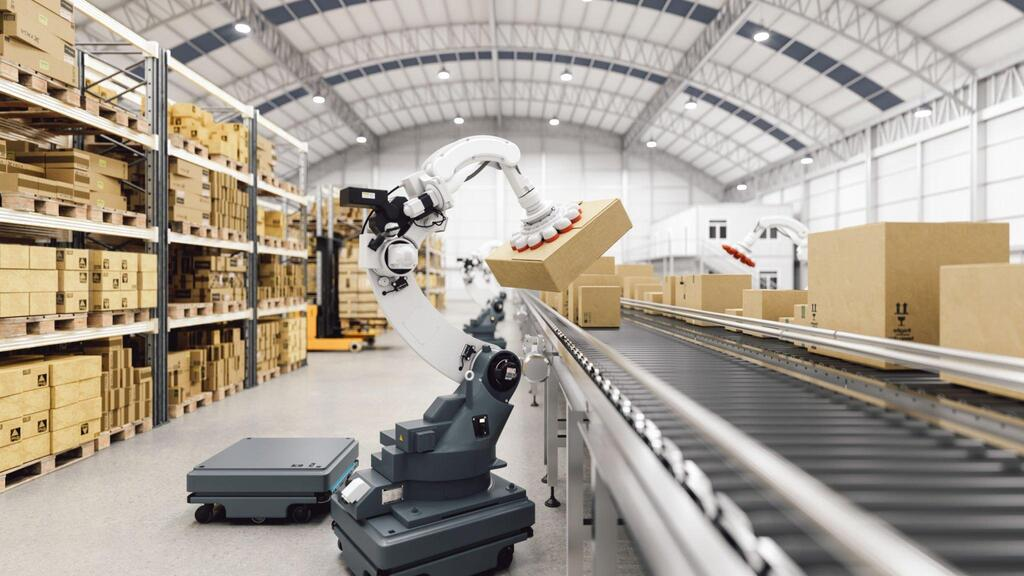
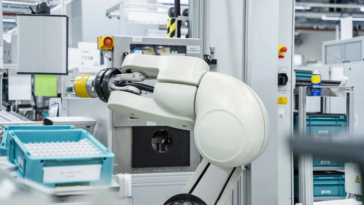
The core innovation lies in Siemens’ multi-agent ecosystem. The company distinguishes between the user-facing Industrial Copilot interfaces and the powerful AI agents operating behind them. Moreover, this system integrates digital agents with physical ones, such as mobile robots. The true differentiator is orchestration; these agents work seamlessly with each other and, critically, with third-party agents. Therefore, Siemens is fostering unprecedented interoperability to solve industry-wide challenges.
The Xcelerator Marketplace: A Hub for AI Innovation
To accelerate adoption, Siemens will launch an Industrial AI Agent Marketplace on its Siemens Xcelerator platform. This hub will offer customers a curated selection of agents, both from Siemens and certified third-party developers. Consequently, it creates a vibrant ecosystem where businesses can find tailored solutions, driving innovation and flexibility.
The Enhanced Industrial Copilot: A Value-Chain Solution
Supercharged by AI agents, the Siemens Industrial Copilot now delivers targeted capabilities for every operational phase:
Design Copilot (Available for NX CAD): Accelerates product design. Engineers use natural language to navigate data and perform complex tasks, significantly boosting development efficiency. A specialized Hydrogen Configurator for plant design is also in development.
Planning Copilot (Pre-release): Optimizes production planning and scheduling using generative AI, helping manufacturers maximize efficiency and reduce waste.
Engineering Copilot (Available for TIA Portal): Transforms automation engineering. It generates PLC code (SCL) from natural language, speeding development and minimizing errors. For process industries, an AI service digitalizes legacy P&ID diagrams.
Operations Copilot (Available for Insights Hub): Provides holistic plant insights. A new version for shop floor workers, coming late 2025, will let operators query machine data and get error guidance via natural language. The Simatic eaSie assistant aids process industry technicians in the field.
Services Copilot (Available with Senseye): Expands from predictive maintenance to cover the entire maintenance lifecycle. Pilot projects show a 25% average reduction in reactive repair time, empowering teams without deep technical expertise.
Bridging the Skills Gap with Tangible Results
This technology directly addresses the manufacturing skills shortage. For example, at thyssenkrupp Automation Engineering, engineers report improved code quality and faster development. At Siemens’ own Bad Neustadt plant, the Production Copilot turns fragmented data into actionable insights. These agents make advanced industrial AI accessible to workers of all experience levels.
Author’s Insight: The Future is Collaborative Autonomy
Siemens’ move signals a major industry inflection point. The focus is shifting from human-in-the-loop assistance to human-on-the-loop orchestration. The vision of a centralized marketplace for industrial AI agents is particularly astute. It acknowledges that no single vendor can solve every problem. By championing interoperability and ecosystem collaboration, Siemens is not just selling a product but cultivating a new industrial operating model where AI agents handle routine complexity, freeing human talent for higher-order innovation.
Practical Application Scenario
Consider a production line issue. An operator asks the Operations Copilot, “Why did Line 3 stop?” The copilot, powered by interconnected AI agents, automatically queries the PLC (Engineering Agent), analyzes historical maintenance data (Services Agent), and checks the production schedule (Planning Agent). Within seconds, it provides a root-cause diagnosis and a recommended action, streamlining resolution from hours to minutes.
Frequently Asked Questions (FAQs)
What is the main difference between an Industrial Copilot and an AI Agent?
An Industrial Copilot is the user interface you interact with. The AI Agents are the autonomous, specialized programs working in the background to execute tasks and workflows requested through the Copilot.
How do these AI agents work with existing Siemens hardware and software?
They are designed for seamless integration with the Siemens ecosystem (e.g., TIA Portal, NX, Simatic controllers) via APIs and native connections on the Xcelerator platform, protecting prior investments.
Can I use AI agents from other companies with Siemens’ system?
Yes. A key pillar of Siemens’ strategy is interoperability. The planned Xcelerator Marketplace will host certified third-party agents, allowing you to build a best-in-class, multi-vendor agent ecosystem.
What is a realistic first step for implementing this technology?
Start with a focused pilot. For instance, deploy the Engineering Copilot for a specific code-generation task or the Services Copilot for predictive maintenance on a critical asset to demonstrate ROI and build internal expertise.
How does this address data security and operational safety?
Agents operate within defined permissions and protocols. The orchestration layer ensures actions are validated. Siemens embeds industrial security standards and offers solutions for air-gapped or on-premise deployment to meet stringent safety and compliance requirements.

 No products in the cart.