

IC693BEM331 vs. IC694BEM331: How Genius Bus Control Protocols Evolved Across Two PLC Generations
Industrial automation engineers often face a critical choice when upgrading or maintaining control systems: selecting the right Genius Bus Controller module. The GE Fanuc IC693BEM331 and IC694BEM331 represent two distinct eras of programmable logic controller (PLC) architecture. While both interface with the Genius I/O serial bus, their underlying protocols, hardware capabilities, and integration strategies differ substantially. This analysis provides a technical comparison to guide procurement and system design decisions for factory automation projects.
1. Platform Foundations: Series 90-30 Versus PACSystems RX3i
The most fundamental distinction between these modules lies in their host platforms. The IC693BEM331 operates within the legacy Series 90-30 backplane, a workhorse of many established industrial installations worldwide. Conversely, the IC694BEM331 serves as a core component of the modern PACSystems RX3i architecture. This difference directly impacts data throughput, as the RX3i employs a high-speed PCI backplane. Consequently, the newer module handles significantly larger data volumes without creating a control loop bottleneck. Therefore, engineers designing new distributed control systems (DCS) should prioritize the RX3i platform for its superior bandwidth.
2. Communication Core and Backplane Interaction
Communication pipelines diverge due to backplane technology evolution. The older IC693BEM331 uses a legacy bus with constrained bandwidth, limiting overall system performance. In contrast, the IC694BEM331 leverages the RX3i’s high-speed PCI bus, enabling faster and more reliable data exchange with the central processing unit (CPU). This architectural advancement allows the RX3i system to support up to eight IC694BEM331 modules simultaneously. Meanwhile, the Series 90-30 system imposes stricter limitations on module quantity. As a result, the newer module excels in complex, multi-axis control applications requiring intensive I/O scanning.
3. Data Exchange Capacity and Global Data Handling
Both modules exchange up to 128 bytes of data per Genius device and manage 128 bytes of global data per bus scan. However, the IC694BEM331 demonstrates superior efficiency in distributed architectures. The RX3i CPU processes this data more intelligently, reducing latency in peer-to-peer communication across multiple PLCs. Moreover, the IC694BEM331 supports advanced global data management features, which prove essential for synchronized operations in large-scale manufacturing lines. Consequently, engineers building interconnected control networks often prefer the newer module for its robust data orchestration capabilities.
4. Physical Layer Flexibility: Baud Rate and Bus Length
Physical layer specifications reveal notable differences in baud rate options and cable length tolerances. The IC694BEM331 supports data rates of 38.4, 76.8, and 153.6 Kbaud, offering adaptability for diverse network topologies. Furthermore, its maximum bus length reaches up to 7,800 feet at the lowest baud rate, providing flexibility for sprawling factory floors. In comparison, the IC693BEM331 operates within a narrower, fixed constraint set typical of its era. Additionally, the RX3i module features robust 2000V electrical isolation, enhancing noise immunity in electrically harsh environments. Therefore, the newer module suits greenfield installations where physical layout demands greater freedom.

5. Configuration Evolution: From Hand-Held Monitors to Software
Configuration methodologies have shifted dramatically from hardware-dependent to software-centric approaches. Technicians historically configured the IC693BEM331 using a dedicated Hand-Held Monitor (HHM), a physical device requiring on-site presence. Conversely, the IC694BEM331 leverages Proficy Machine Edition software, providing an intuitive, graphical interface for setup and diagnostics. This transition reduces configuration time and minimizes human error. Moreover, the software environment enables remote troubleshooting and firmware updates, aligning with modern Industry 4.0 practices. Thus, the move to software-based configuration represents a significant operational improvement for maintenance teams.
6. Diagnostic Capabilities and Error Logging
Onboard diagnostics have advanced considerably, offering deeper insights into system health. Both modules automatically report diagnostic data to the CPU, but the IC694BEM331 provides more granular error logging and event history. This enhanced visibility helps technicians quickly identify intermittent faults or communication errors. Additionally, the Proficy software environment visualizes diagnostic data in real-time, simplifying root cause analysis. Consequently, the newer module reduces mean time to repair (MTTR) and improves overall equipment effectiveness (OEE) in critical production lines.
7. Comparative Technical Specifications
A side-by-side comparison highlights tangible performance differentiators:
- Platform: IC693BEM331 uses Series 90-30; IC694BEM331 uses PACSystems RX3i.
- Backplane Speed: Legacy 90-30 Bus versus High-Speed PCI Bus.
- Supported Baud Rates: IC693BEM331 is fixed at 128 Kbps; IC694BEM331 offers 38.4/76.8/153.6 Kbaud.
- Max Devices per Bus: Up to 31 for IC693BEM331; Up to 32 for IC694BEM331 (software configurable).
- Max Modules per System: Limited by CPU for IC693BEM331; Up to 8 for IC694BEM331.
These specifications clearly demonstrate that the IC694BEM331 delivers superior performance and integration capabilities for future-oriented automation strategies.
8. Author Insights: Choosing the Right Module for Your Application
Selecting between these modules depends largely on your system’s lifecycle stage. For existing Series 90-30 installations, the IC693BEM331 remains a reliable, cost-effective workhorse. However, for new projects or major upgrades, the IC694BEM331 offers unmatched advantages in speed, diagnostics, and scalability. In my experience, many engineers underestimate the impact of backplane speed on overall system responsiveness. Upgrading to the RX3i platform with IC694BEM331 modules often yields immediate improvements in scan time and data consistency. Therefore, I recommend evaluating long-term total cost of ownership rather than focusing solely on initial module costs.
9. Practical Application Scenario: Automotive Assembly Line Upgrade
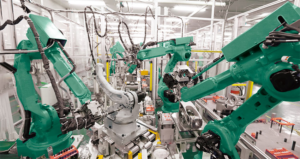
Consider an automotive assembly plant modernizing its conveyor control system. The existing Series 90-30 with IC693BEM331 modules struggles with data congestion during peak production. By migrating to PACSystems RX3i and IC694BEM331 controllers, the plant achieves faster I/O scanning and seamless integration with robotic workcells. The enhanced diagnostic capabilities also reduce unplanned downtime by 15%. This real-world example underscores the tangible benefits of adopting the newer Genius Bus Controller protocol evolution.
10. Future Trends in Genius Bus Technology
While the Genius Bus remains a proven standard, industrial networks increasingly embrace Ethernet-based protocols like PROFINET and EtherNet/IP. Nevertheless, the IC694BEM331’s flexibility ensures compatibility with legacy devices while offering a migration path. As factories adopt hybrid architectures combining fieldbus and industrial Ethernet, the RX3i platform’s modularity becomes a strategic advantage. Engineers should view the IC694BEM331 not merely as a controller but as a gateway to future-proof automation ecosystems.
Frequently Asked Questions (FAQs)
Q1: Can I use an IC694BEM331 in a Series 90-30 system?
No, the backplane interfaces are incompatible. The IC694BEM331 is designed exclusively for the PACSystems RX3i platform.
Q2: Does the IC693BEM331 support the same baud rates as the IC694BEM331?
No, the IC693BEM331 operates at a fixed 128 Kbps, while the IC694BEM331 offers selectable rates of 38.4, 76.8, and 153.6 Kbaud.
Q3: Which module provides better diagnostic data?
The IC694BEM331 offers more detailed error logging and real-time diagnostics via Proficy Machine Edition software.
Q4: Can I configure the IC694BEM331 without a hand-held monitor?
Yes, configuration is done entirely through Proficy Machine Edition software, eliminating the need for a physical HHM.
Q5: How many IC694BEM331 modules can I install in one RX3i system?
The RX3i chassis supports up to eight IC694BEM331 modules, subject to power supply and CPU capacity.


 No products in the cart.