
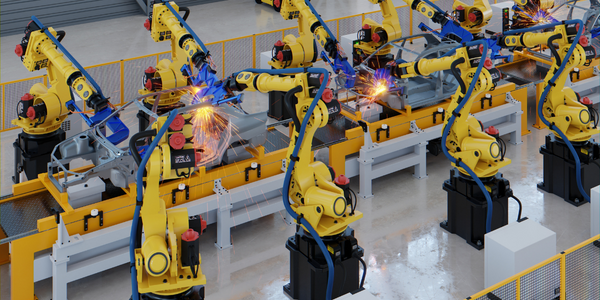
Rockwell Automation Integrates AI and Digital Twins into Core Sustainability Strategy
Global industrial automation leader Rockwell Automation has published its 2025 Sustainability Report, detailing a fundamental shift in operational philosophy. The report positions environmental and social governance not as standalone initiatives but as integral components of core manufacturing strategy and business growth.
Merging Sustainability with Production through Digital Technology
Rockwell Automation is scaling advanced digital solutions to help manufacturers achieve dual objectives. The company leverages artificial intelligence and digital twin technology specifically. Consequently, clients can optimize energy consumption and manage emissions more effectively. This integrated approach simultaneously enhances overall productivity and product quality.
Leadership Perspective on Industrial Transformation
Blake Moret, Chairman and CEO of Rockwell Automation, emphasized the company’s unique role. “As both a manufacturer and a global partner, we lead the operational transformation,” Moret stated. He confirmed that their technologies enable tangible reductions in energy use, waste, and emissions. Solutions range from smart machines to advanced motion control and cybersecurity. The core promise is achieving sustainability targets without sacrificing operational performance.
A Three-Pillar Framework: Environment, Social, and Governance
The corporate strategy organizes efforts around three critical areas.
Environmental: Efforts focus on advancing energy management and designing products for circularity and efficiency from the outset.
Social: Investments target workforce development, safety, and community education.
Governance: This pillar rigorously integrates cybersecurity and product safety into enterprise risk management and ethical leadership protocols.

Creating Value for Three Key Stakeholder Groups
Rockwell’s sustainability model delivers targeted value across distinct groups:
Sustainable Customers: The company provides scalable, intelligent automation solutions. These tools directly help manufacturers meet their own environmental and operational goals.
Sustainable Company: Internally, initiatives focus on making Rockwell’s own global operations safer, more efficient, and culturally responsible.
Sustainable Communities: The company invests in local education and STEM workforce development in regions where its employees live and work.
Building Resilience and Long-Term Value
The report underscores strategic investments in climate adaptation to strengthen supply chains. Rockwell has also committed to science-based targets for emissions reduction. Emmanuel Guilhamon, Vice President for Sustainability, clarified the intent. “This is not about checking boxes,” Guilhamon stated. “It’s about building a resilient business and creating long-term value. Sustainability is our growth strategy.”
Industry Analysis: The Inevitable Convergence of Automation and ESG
Rockwell’s report signals a broader industrial trend. Leading manufacturers no longer view sustainability reporting as a mere compliance exercise. Instead, they are harnessing operational technology (OT) and information technology (IT) convergence to drive it. AI and digital twins provide the necessary data granularity and predictive power to turn environmental goals into measurable, automated outcomes. This shift transforms sustainability from a cost center into a source of efficiency, innovation, and competitive advantage. Companies that fail to integrate these systems risk operational inefficiency and strategic obsolescence.

Frequently Asked Questions (FAQs)
Q: How do AI and Digital Twins actually improve sustainability?
A: They create virtual models of physical systems to simulate, predict, and optimize performance. AI analyzes operational data in real-time to automatically adjust processes for minimal energy use and waste.
Q: What are “science-based targets” for emissions?
A: These are greenhouse gas reduction goals aligned with the latest climate science to meet the Paris Agreement objectives. They are validated by the Science Based Targets initiative (SBTi).
Q: Can sustainability efforts truly co-exist with productivity goals?
A> Yes. Modern automation demonstrates that efficiency often aligns with sustainability. Reducing energy waste or material scrap directly lowers costs and environmental impact, boosting both productivity and ESG metrics.
Q: Why is cybersecurity part of a sustainability report?
A: Governance (the “G” in ESG) includes operational resilience. Cybersecurity is critical for protecting infrastructure, ensuring safety, and maintaining trust—all foundational to sustainable, long-term business.
Q: How can other manufacturers implement a similar strategy?
A> Start by integrating sustainability metrics into existing process control and MES systems. Use data to establish a baseline, then apply scalable digital tools for continuous improvement, targeting energy, emissions, and yield.


 No products in the cart.