
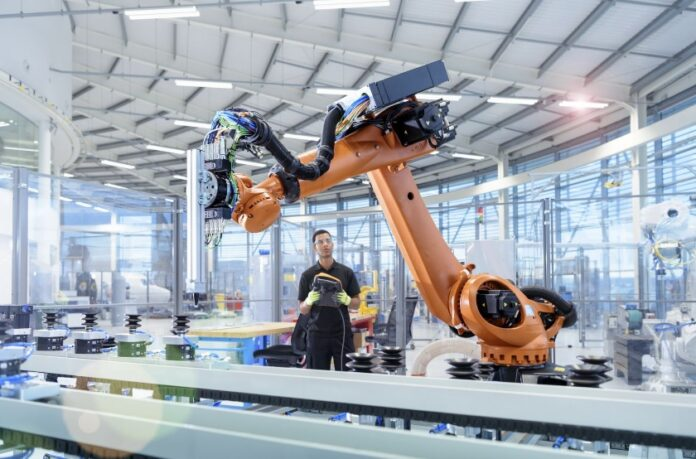
2026 AM Forecast: Software Unlocks Industrial Scale for 3D Printing
In additive manufacturing, software is no longer a supporting tool—it is the strategic lever for scaling production. As we approach 2026, advancements in AI, process automation, and digital integration are set to transform 3D printing from a prototyping technology into a reliable, cost-effective industrial process. This article explores key software-driven trends that will define the next phase of AM adoption.
The AI Tipping Point: Beyond Assistants to Autonomous Workflows
Generative AI and large language models are moving from conversation to creation in AM. Industry leaders predict that by 2026, AI agents will orchestrate complete manufacturing workflows—from design and simulation to printing and inspection—with minimal human intervention. This evolution will democratize access to complex processes, allowing engineers to focus on innovation rather than manual tasks.
Key Takeaway: AI won’t replace engineers but will elevate their role. Systems that understand design intent can automate documentation, optimize builds, and ensure compliance, making AM viable for regulated industries like aerospace and medical devices.
Closing the Production Loop: Automation Meets Qualification
The industry is shifting from build-centric to part-centric qualification. With initiatives like the NDAA’s one-million-part mandate driving urgency, software platforms that integrate in-process monitoring, automated inspection, and digital traceability will become essential. Real-time data analytics will enable closed-loop control, where printers self-correct based on sensor feedback, ensuring consistent quality across production runs.
Author’s Perspective: True industrialization of AM hinges on repeatability. Software that unifies design, printing, and verification into a seamless digital thread is the only scalable path to certified serial production.
Democratization Through Commoditized Software Stacks
As entry-level industrial printers become more capable, advanced software features—once exclusive to high-end systems—are becoming accessible. AI-powered quality prediction, generative design, and process simulation are now available in sub-$100K software packages. This levels the playing field for small to mid-sized manufacturers, enabling them to compete in high-value applications.
Industry Impact: Lowering the software barrier accelerates adoption across supply chains, fostering innovation in tooling, spare parts, and customized components.
The Integration Imperative: AM in the Enterprise IT Landscape
Standalone AM software is giving way to integrated platforms that connect with ERP, PLM, and MES systems. Solutions like Siemens Mendix and Autodesk Fusion demonstrate how AM can be embedded into existing digital infrastructure. This integration ensures that additive processes align with broader production schedules, inventory management, and business operations.
Why It Matters: Seamless integration reduces friction in adopting AM at scale, making it a natural extension of smart factory initiatives rather than an isolated technology silo.
Laser Control & Microscale Customization
In laser powder bed fusion (LPBF), software is enabling unprecedented control at the vector level. This allows manufacturers to fine-tune energy input, scan paths, and cooling rates to achieve specific material properties and surface finishes. Such granular control creates new opportunities for intellectual property—companies can differentiate not just by part design, but by their unique printing process parameters.
Strategic Advantage: This transforms AM from a geometric freedom tool into a metallurgical engineering platform, opening doors to applications in thermal management, lightweighting, and performance-critical components.
The Human Factor: Upskilling for a Software-Driven Era
As software automates routine tasks, the role of AM professionals is evolving. Demand is growing for cross-disciplinary “full-stack builders” who understand design, simulation, data analytics, and machine operations. Continuous learning in digital tools and AI interpretation will be critical to leveraging AM’s full potential.
Author’s Advice: Invest in training teams on integrated software platforms and data literacy. The future belongs to organizations that can blend technical expertise with digital fluency.
2026 Outlook: Pragmatism Over Hype
While AI captures headlines, the most impactful software advances will be those that solve practical production challenges: ensuring repeatability, simplifying qualification, and reducing total cost of operation. The winning platforms will prioritize robustness, security, and interoperability over standalone features.
Final Thought: The trajectory is clear—software is the catalyst that will finally transition AM from the lab to the factory floor at scale. Companies that embrace integrated, intelligent software ecosystems today will lead the industrial transformation of tomorrow.

Frequently Asked Questions
Q1: How will AI actually improve 3D printing in 2026?
A1: AI will move beyond design assistance to autonomously manage entire workflows—automatically optimizing print parameters, predicting defects, generating compliance reports, and adapting processes in real-time based on sensor data.
Q2: Is closed-loop control in AM a reality now?
A2: Early systems are already operating in pilot environments, using in-situ monitoring and AI analysis to make micro-corrections during prints. By 2026, this capability will become standard in industrial-grade systems, ensuring consistent quality.
Q3: Will software advances make AM machines more expensive?
A3: Conversely, sophisticated software is making advanced capabilities accessible on more affordable hardware. The total cost of ownership is decreasing as software improves first-pass yield, reduces material waste, and accelerates qualification.
Q4: What’s the biggest barrier to AM software adoption?
A4> Integration with legacy enterprise systems and cultural resistance to workflow change are key hurdles. Success requires selecting platforms that connect to existing IT infrastructure and investing in team training.
Q5: Can small shops compete with large firms in using advanced AM software?
A5: Absolutely. Cloud-based and subscription software models democratize access to simulation, AI tools, and production management platforms, allowing smaller manufacturers to leverage enterprise-grade capabilities without large upfront investments.
 No products in the cart.