
Unified Industrial Automation: New FDI Specification Roadmap Announced

Industry Leaders Establish Integration Timeline
FieldComm Group’s Strategic Integration Committee has revealed the official schedule for releasing the updated Field Device Integration Specification. This development represents a crucial advancement toward standardizing device integration across multiple automation sectors. The committee includes major automation suppliers and standards organizations working collaboratively.
Accelerated Progress Through Strategic Combination
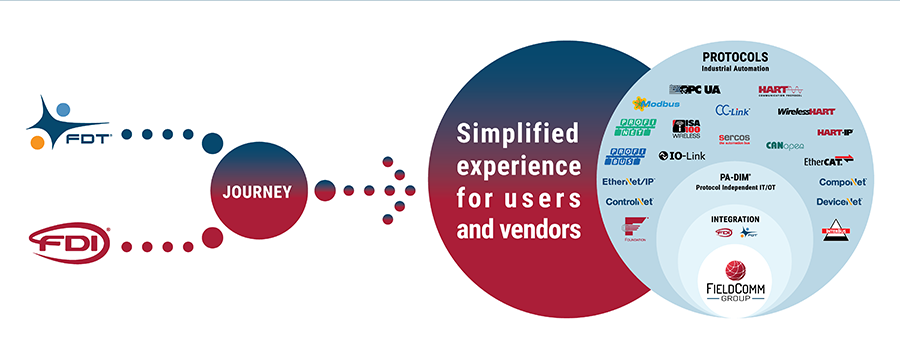
Following the transfer of FDT/DTM assets to FieldComm Group last year, the organization has dramatically increased its efforts toward unified device integration. Consequently, the resulting roadmap emerges from coordinated work between the Strategic Integration Committee and specialized working groups. The committee comprises board-level companies from FieldComm Group alongside key leaders from OPC Foundation, ODVA, and PROFIBUS & PROFINET International.
Enhanced Specification Features
The updated FDI Specification introduces several significant improvements:
- Compliance with Cyber Resilience Act requirements
- Unified standard for process and factory automation
- Legacy system support enabling modernization
- Real-time OT/IT connectivity via common information model
- Modern platform and development tool support
- Advanced device management with protocol tunneling
Implementation Timeline
The migration schedule establishes clear expectations:
- Updated FDI Specification release: End of 2026
- Updated FDI Developer Toolkit deployment: End of 2027
- Market availability of registered systems and devices: 2029
Industry Leadership Perspectives
“Contemporary industrial systems face unprecedented complexity, yet interoperability must remain uncompromised,” stated Steve Biegacki, Strategic Integration Committee Chair. “We’re delivering a unified solution that enhances data interoperability while supporting innovative manufacturing features. Moreover, this approach provides a practical migration path that protects existing investments.”
Stefan Hoppe, OPC Foundation President, commented: “As co-owner of the FDI specification, we’re committed to robust device integration for OPC UA users. Therefore, we fully support harmonizing FDI and FDT technologies.”
“ODVA supports this harmonization to enable enhanced device integration for EtherNet/IP users,” said Al Beydoun, ODVA President.
Dietmar Bohn, PI Executive Director, noted: “PI appreciates FieldComm Group’s initiative in merging these technologies while considering all stakeholder requirements.”
Practical Applications and Benefits
This update enables manufacturers to transition toward smarter, more responsive operations. Additionally, it unlocks greater value from industrial data and modern automation architectures. For instance, plants can maintain existing infrastructure while gradually implementing new capabilities. This phased approach reduces implementation risks and costs significantly.
From my professional perspective, this unification addresses a critical industry challenge. Many facilities operate mixed automation environments where consistent device management proves difficult. The updated specification potentially reduces engineering hours spent on device configuration and maintenance. Furthermore, the nested communications capability allows deeper device access across protocol boundaries.
Engagement Opportunity
FieldComm Group encourages all automation stakeholders to participate in this transition. Vendors, system integrators, and end users should monitor key milestones and prepare for implementation. Early engagement ensures smoother adoption and maximizes benefit realization.
About FieldComm Group
FieldComm Group is a global standards organization advancing industrial automation through open, interoperable technologies. The nonprofit community includes end users, manufacturers, service providers, and research institutions. It promotes standards for industrial communication, device integration, and enterprise connectivity across manufacturing sectors.
Frequently Asked Questions
What problem does the unified FDI specification solve?
It addresses the challenge of managing diverse automation devices across different protocols and platforms through a single, standardized approach.
How does this affect existing automation investments?
The specification supports legacy systems, allowing gradual modernization without requiring complete infrastructure replacement.
What is protocol tunneling or nested communications?
This capability enables communication through multiple protocol layers, allowing access to device information across different network types.
When should companies begin planning for implementation?
Organizations should start evaluating their current device management strategies now to prepare for the 2026 specification release.
How does this align with Industry 4.0 initiatives?
The unified approach supports digital transformation by making industrial data more accessible and actionable across IT and OT systems.

 No products in the cart.