

The 2025 Reality: Data-Driven Assembly Lines
Today’s PCB assembly lines are interconnected ecosystems. Machine intelligence, quality control systems, and production management software now work in unison. This integration meets critical market demands. Automotive, industrial IoT, and consumer electronics require shorter lead times and handle more complex designs. Therefore, practical Industry 4.0 adoption is no longer optional; it’s a core competitive requirement.
Author Insight: The gap between leaders and laggards is widening. A survey by Priority Software reveals a significant opportunity: 50% of manufacturers still lack full real-time shopfloor visibility. This data blind spot is where competitors gain their advantage.
Real-Time Process Monitoring: The New Quality Standard
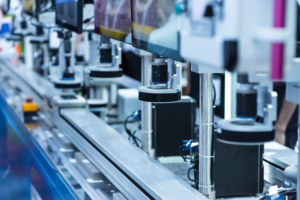
Isolated machines are obsolete. In modern Surface-Mount Technology (SMT) lines, every piece of equipment generates valuable data. Pick-and-place machines, Automated Optical Inspection (AOI) systems, and reflow ovens stream performance metrics to centralized dashboards. This allows engineers to spot process deviations instantly—such as a slight misalignment or a temperature drift—and intervene before defects occur. ResearchAndMarkets data confirms this approach drastically improves first-pass yield.
Predictive Maintenance: From Schedule-Based to Condition-Based
Reactive maintenance disrupts production. The new paradigm uses machine learning models that analyze historical and real-time data from placement heads, conveyor belts, and soldering systems. These models predict failures before they happen. Consequently, maintenance occurs based on actual machine health, not a calendar. Market Business Insights reports that 42% of manufacturers using this method achieve 20-30% lower maintenance costs and significantly reduce unplanned downtime.
Digital Work Instructions: Eliminating Paper-Based Errors
Paper travelers and static PDFs introduce risk. Digital work instruction systems display live, revision-controlled steps directly at each workstation. Operators see the exact requirements for the specific board being assembled, including approved component substitutions or special handling notes. This reduces assembly errors, speeds up training for new staff, and ensures perfect synchronization with Engineering Change Orders (ECOs).
Integrated Supply Chain Visibility: From Procurement to Delivery
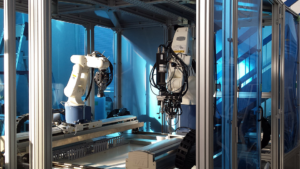
Global volatility makes supply chain transparency essential. Modern Manufacturing Execution Systems (MES) integrate deeply with Enterprise Resource Planning (ERP) and Material Requirements Planning (MRP) software. This provides a real-time view of material availability, work-in-progress, and order status. Manufacturers can track components from goods receipt through final assembly, enabling full lot traceability—a critical requirement in automotive and medical electronics.
Augmented Expertise: Empowering the Human Workforce
Industry 4.0 augments human skill; it doesn’t replace it. Skilled process engineers use digital twins and simulation software to validate new product introductions (NPI) virtually. They analyze Design for Manufacturability (DFM) feedback earlier, preventing costly post-production fixes. This human-machine collaboration accelerates innovation while maintaining high-quality standards.
The Next Frontier: Closed-Loop Manufacturing Systems
The future of PCB assembly is self-optimizing. Closed-loop systems represent the pinnacle of Industry 4.0 integration. Imagine an AOI system detecting a consistent solder paste issue and automatically sending a correction parameter to the stencil printer. Or a reflow oven adjusting its thermal profile in real-time based on the specific board’s thermal mass. This level of integration, as noted by ResearchAndMarkets, promises unmatched repeatability and paves the way for truly lights-out manufacturing for high-volume production.
Practical Implementation Scenario
Consider a contract manufacturer facing yield issues on a complex IoT module. By implementing an integrated MES and real-time monitoring, they identify a systematic placement inaccuracy on one pick-and-place head. Predictive maintenance flags a worn component feeder before it causes a major stop. Digital work instructions ensure correct assembly of a newly sourced alternative component. Supply chain dashboards provide early warning of a capacitor shortage, allowing proactive sourcing. Within months, first-pass yield improves by 15%, and lead time variability shrinks significantly.
Conclusion: A Foundation for Future Competitiveness
Industry 4.0 has matured from a marketing concept into the essential infrastructure for modern PCB assembly. It provides the data, connectivity, and intelligence required to navigate rising complexity and market pressure. Manufacturers who invest in these connected, data-driven systems today are not just solving current problems—they are building the resilient, efficient, and adaptable operations that will define leadership in the years to come.
Frequently Asked Questions (FAQs)
Q: What is the most impactful first step for a PCB assembler starting with Industry 4.0?
A: Implementing a foundational Manufacturing Execution System (MES) to gain real-time shopfloor visibility. You cannot improve what you cannot measure. This data layer is crucial for all subsequent advanced analytics and automation.
Q: How does real-time monitoring specifically improve AOI effectiveness?
A: It moves AOI from a final checkpoint to an in-process control tool. Real-time data from AOI can be correlated with data from the stencil printer and reflow oven. This allows engineers to identify the root cause of defects (e.g., “insufficient solder paste leading to head-in-pillow defects”) and correct the upstream process immediately.
Q: Is predictive maintenance feasible for older SMT equipment?
A> Yes, through retrofitting. Many older machines can be fitted with IoT sensors to monitor vibration, temperature, and cycle counts. This data can be fed into a cloud-based or on-premise analytics platform to start building predictive models, extending the life and reliability of existing capital assets.
Q: How does closed-loop manufacturing differ from basic automation?
A: Basic automation performs repetitive tasks. Closed-loop manufacturing creates a feedback cycle where inspection data automatically adjusts the production process without human intervention. It’s a self-correcting system that continuously optimizes for quality and efficiency.
Q: What is the biggest barrier to Industry 4.0 adoption in PCB assembly?
A> Often, it’s cultural and organizational, not technical. Success requires breaking down silos between IT, production, and process engineering teams. A clear strategy that aligns technology investments with specific business outcomes (e.g., “increase yield by 5%”) is essential to overcome this barrier.
 No products in the cart.