
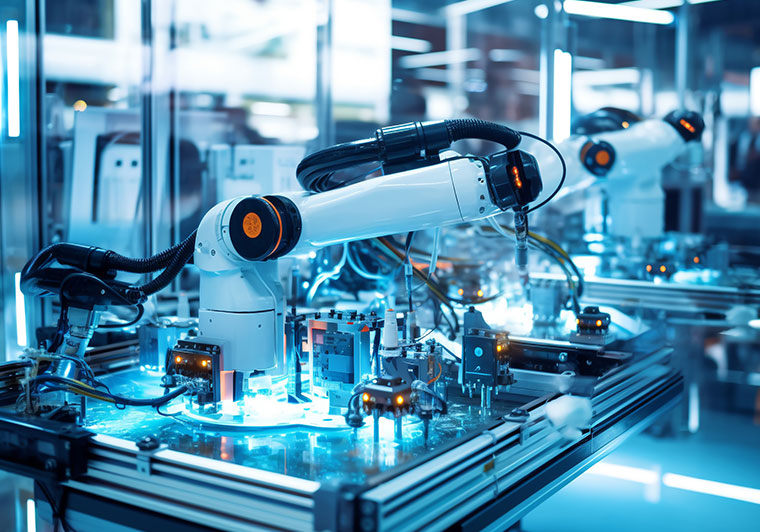
Industry 5.0 Success Demands Strategic Investment in Human Capital
The dawn of Industry 5.0 marks a pivotal evolution beyond automation. This new phase, championed by bodies like the European Commission, emphasizes a human-centric approach. It focuses on sustainable and resilient systems where human creativity collaborates with advanced robotics and AI. For business leaders, therefore, the critical question shifts from pure technological adoption to workforce readiness. Is your organization investing enough to bridge the widening skills gap?
The Philippine Landscape: Challenges and Opportunities
For the Philippines, Industry 5.0 presents a dual-edged scenario. On one hand, it risks job displacement in roles susceptible to full automation. Conversely, it creates unprecedented opportunities in data analytics, system maintenance, and collaborative robotics. The key differentiator will be strategic workforce development. Companies that proactively reskill their employees will unlock new levels of productivity and innovation. Conversely, those that delay may face significant talent shortages and operational bottlenecks.
Upskilling vs. Reskilling: A Strategic Distinction
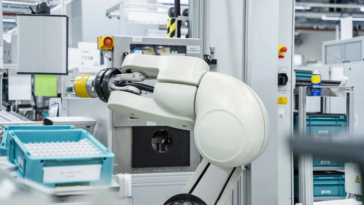
Navigating this transition requires understanding two core concepts. Upskilling enhances an employee’s existing capabilities, often by integrating digital tools like PLC programming or data visualization into their daily work. Reskilling, however, prepares workers for entirely new functions, such as moving from manual inspection to managing a collaborative robot (cobot) cell. Both are essential investments. A study by Proaction International confirms that upskilling is vital for effective human-machine collaboration, a cornerstone of Industry 5.0 success.
Beyond Training: Building a Culture of Continuous Learning
Effective adaptation requires more than sporadic training sessions. It demands cultivating a continuous learning culture integrated into business strategy. As Randstad’s 2025 Workmonitor indicates, 76% of global workers value development programs for their career future. Modern Learning & Development (L&D) must be personalized, engaging, and directly tied to strategic goals. Successful models exist, like Google’s peer-led G2G program, which fosters ownership and knowledge sharing. In the Philippine context, partnering with PRC-accredited CPD providers, such as P&A Grant Thornton’s learning arm, offers a structured path to maintain professional relevance and license compliance while building future-ready skills.
Author’s Insight: The Human-Machine Synergy as Competitive Advantage
The narrative that technology replaces people is outdated. In Industry 5.0, the greatest value is created at the intersection of human intuition, problem-solving, and machine precision. Siemens exemplifies this by placing human workers at the center of its digitalization strategy. The real investment isn’t just in software or cobots; it’s in empowering people to leverage these tools. Organizations that view L&D as a core strategic imperative—not an HR cost—will build a more agile, innovative, and resilient enterprise. This human-tech synergy is the ultimate competitive advantage in the coming decade.
Actionable Steps for Industrial Leaders
- Conduct a Skills Gap Analysis: Audit your current workforce capabilities against the technical needs of Industry 5.0, focusing on data literacy, basic programming, and systems thinking.
- Develop Personalized Learning Pathways: Move beyond generic training. Create tailored upskilling/reskilling tracks aligned with both business objectives and individual career aspirations.
- Foster Internal Knowledge Networks: Encourage mentorship and peer-to-peer learning programs to institutionalize knowledge and accelerate adoption of new practices.
- Partner with Accredited Experts: Collaborate with reputable institutions like P&A Academy to access high-quality, relevant CPD programs that ensure training meets industry standards.

Industry 5.0 Workforce Development FAQ
Q1: What is the core difference between Industry 4.0 and Industry 5.0?
A1: Industry 4.0 focuses on interconnectivity, automation, and machine learning. Industry 5.0 builds upon this by adding a human-centric, sustainable, and resilient dimension, emphasizing collaboration between humans and advanced technology.
Q2: Why is investing in people critical for Industry 5.0 adoption?
A2: The technologies of Industry 5.0, such as collaborative robots and AI-driven analytics, require human oversight, interpretation, and creativity to maximize value. Without a skilled workforce, technological investments fail to achieve their full potential.
Q3: How can companies in the Philippines start preparing their workforce?
A3: Begin with a skills audit, partner with accredited training providers for CPD programs, and integrate continuous learning into company culture. Focusing on data skills, adaptive thinking, and human-machine collaboration is key.
Q4: What are the risks of not adapting to Industry 5.0?
A4> Organizations risk talent obsolescence, decreased competitiveness, inability to innovate, and operational inefficiencies. They may also struggle with employee retention as skilled workers seek employers who invest in their development.
Q5: Can small and medium enterprises (SMEs) afford to invest in upskilling?
A5: Yes. Strategic, focused investments in critical skill areas often yield a higher ROI than large, unfocused programs. Leveraging online platforms, micro-credentials, and consortium-based training with other SMEs can make development cost-effective.

 No products in the cart.