

Your Guide to GE Genius Bus Terminal Bases: IC660EBA100 Series Explained
In modern industrial automation, signal integrity is non-negotiable. For engineers working with GE’s renowned Genius distributed I/O system, selecting the correct terminal base is a foundational decision. The IC660EBA100 series forms the critical junction between intelligent modules and field devices. This guide delivers a clear, professional breakdown of these components. We cover their operation, compare key models, and provide actionable selection advice to optimize your control system’s performance and longevity.
The Role of Terminal Bases in the Genius I/O System
The Genius bus from GE Automation is a robust peer-to-peer network. It decentralizes control by distributing input/output points throughout a factory. Terminal base units are the physical backbone of this system. Each base securely mounts a smart Genius I/O module. Moreover, it provides the screw terminals for connecting field device wiring. Consequently, the base manages the crucial electrical interface between the module’s electronics and the raw field signals. This ensures organized, reliable, and safe integration within any PLC or DCS architecture.
How Genius Terminal Bases Work: A Simplified View
All IC660EBA1xx models share a core operational principle. They serve as a passive yet vital interface adapter. The base receives the module’s edge connector. Internally, its circuitry routes signals from the field wiring terminals to the module’s contacts. Therefore, it translates between the low-voltage logic of the control system and the various power levels used by actuators and sensors. Selecting the proper base guarantees not just mechanical fit but also essential electrical compatibility and safety isolation.

Comparing IC660EBA100 Series Models for Your Application
Choosing the right model depends on your voltage and density needs. Here is a detailed comparison to guide your specification.
IC660EBA100: The 120V AC Standard Choice
This base supports 120V AC control circuits, common in North America. It handles standard digital I/O at this voltage. Typical uses include operating AC motor starters, solenoids, or indicator lights. It is a reliable choice for general manufacturing assembly lines and conveyor systems.
IC660EBA101: Maximizing Density for 120V AC
The EBA101 also operates at 120V AC. However, it offers a higher terminal count. This design maximizes wiring density in space-limited control panels. System integrators favor it for compact cabinet designs. It allows more I/O points per rack unit without expanding the panel size.
IC660EBA103: Isolated Performance for 240V AC
Designed for 240V AC applications, this base features enhanced isolation. This construction provides superior protection against electrical noise and voltage spikes. As a result, it is ideal for harsh environments. Use it with heavy machinery, pumps, or in facilities with less stable power quality.
IC660EBA104: The Global 24V DC Standard
The EBA104 is configured for 24V DC systems, the global standard for modern control. It interfaces with proximity sensors, photoelectric eyes, and PLC input cards. Its applications are vast, spanning automotive, food packaging, and pharmaceutical automation where safe, low-voltage DC control is essential.
IC660EBA105: High-Density 24V DC Solution
Similar to the EBA101, the EBA105 is the high-density version for 24V DC. It is perfect for large DCS racks or centralized control systems managing hundreds of digital I/O points. This model optimizes cabinet space and reduces hardware footprint, offering a cost-effective solution for extensive I/O networks.
Expert Selection Guidelines and Industry Perspective
Selecting a terminal base requires careful analysis. First, always match the field device voltage exactly. A mismatch risks module failure and safety hazards. Second, assess your panel layout. High-density bases save space but may require more precise wiring practices. Third, evaluate the electrical environment. Isolated bases (like the EBA103) are prudent in high-noise areas to prevent ground loops and signal errors.
From an industry standpoint, the enduring legacy of the Genius ecosystem is impressive. Many systems operate reliably for decades. Therefore, maintaining spares like the common IC660EBA104 is crucial for plant uptime. The clear industry trend favors 24V DC for its safety, compatibility with solid-state devices, and energy efficiency. My professional recommendation is to standardize on 24V DC models for new installations. Reserve AC bases only for specific, high-power load requirements. Always cross-reference the latest technical documentation from Emerson (now overseeing GE Automation) for final validation.
Practical Application Scenarios and Solutions
Scenario 1: Automotive Assembly Line Retrofit
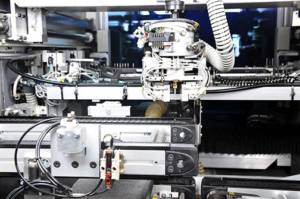
A plant upgrades a legacy panel but keeps the Genius network. They use IC660EBA105 bases to integrate new 24V DC robotic tooling sensors into the existing DCS. The high-density design allows the addition of I/O points without panel modification.
Scenario 2: Water Treatment Plant Expansion
A facility adds new pump controls in a electrically noisy environment. Engineers specify IC660EBA103 isolated bases for the 240V AC pump motor starters. This choice protects the sensitive Genius communication bus from transient interference.
Frequently Asked Questions (FAQ)
Q1: Can I mix different IC660EBA1xx base models on the same Genius bus?
A1: Yes, absolutely. The Genius bus supports a mix of different I/O modules and their corresponding terminal bases. You can use 120V AC bases for motor controls and 24V DC bases for sensors on the same network.
Q2: What is the primary difference between “standard” and “high-density” bases?
A2: The difference is the number of wiring terminals. High-density bases pack more terminals into the same physical footprint. This allows connection of more field devices per module, saving panel space.
Q3: Is the IC660EBA103 base necessary for all 240V AC applications?
A3: Not always, but it is highly recommended. Its isolated design provides an extra layer of protection against electrical noise and ground faults, which are more common with higher voltage circuits, especially in industrial settings.
Q4: Are these terminal bases compatible with other GE PLC series?
A4: The IC660EBA100 series is designed specifically for Genius bus I/O modules. They are not directly compatible with other GE PLC series like RX3i or VersaMax, which use different form factors and bus systems.
Q5: How critical is it to use the official GE/Emerson terminal base?
A5: It is very critical. Using third-party or uncertified bases can void warranties and compromise system safety and reliability. Official bases are engineered to meet strict specifications for electrical isolation, material quality, and mechanical fit.


 No products in the cart.