
Automation Transforms Biopharma: A $2.92 Billion Market Driven by Innovation
The biopharmaceutical industry is undergoing a digital and automated revolution. With increasing drug complexity and demand for personalized medicine, companies are adopting advanced technologies for precision, efficiency, and scalability. The automation in biopharma industry market, valued at $2.08 billion in 2024, is projected to grow at a 7.4% CAGR to reach $2.92 billion by 2029. This transformation is fundamentally changing how therapies are discovered, developed, and manufactured.
Key Market Drivers and Growth Catalysts
The Rise of Robotics and Complex Therapies
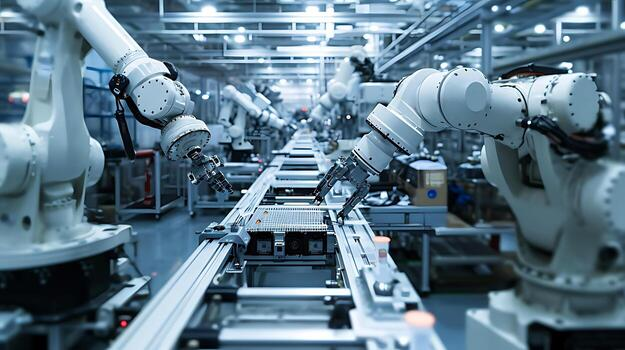
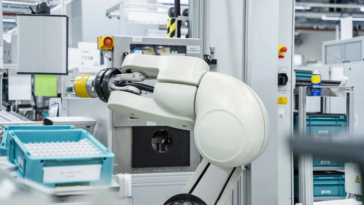
Robotics integration across pharmaceutical manufacturing is a primary growth driver. Robots perform tasks from laboratory automation to packaging personalized medicines, enhancing productivity, precision, and safety. The International Federation of Robotics reported 92,393 industrial robot installations in European manufacturing in 2024.
Accelerating drug development for complex biologics and cell/gene therapies requires sophisticated tools. The U.S. FDA approved 37 novel drugs in 2022. Automating tasks in the drug discovery and production phases manages complexity and speeds time-to-market.
The Strategic Shift to Data-Driven Operations
Digitization technology is another growth pillar. Enhanced data integrity and documentation are crucial in regulated environments. Technologies like Process Analytical Technology (PAT), cloud computing, and the Internet of Things (IoT) enable real-time monitoring, supporting modular bioprocessing facilities and biosimilars demand.
Industry Insight: “Automation is no longer just about replacing manual labor; it’s about building intelligent, connected ecosystems. The winning platforms integrate automation hardware with digitization technologies like AI and digital twins for predictive insights and adaptive bioprocessing.”
Competitive Landscape and Strategic Moves
Major Players and Market Segmentation
The market features industrial automation giants and life science specialists including Thermo Fisher Scientific Inc., Danaher Corporation, Siemens Healthineers AG, and PerkinElmer Inc. Competition spans key segments:
- By Technology: Automation Technology (Robotics, Control Systems) and Digitization Technology (Data Analytics, IoT)
- By Component: Automation Hardware, Automation Software, Services (Project & Operation)
- By Application: Clinical Phase, Drug Discovery Phase, Production Phase
Innovation and Consolidation
Companies focus on technological advancement. PerkinElmer launched the Cellaca PLX Image Cytometry System in 2022 to simplify cell analysis in therapy manufacturing.
Strategic acquisitions also shape the field. Bruker Corporation acquired Optimal Industrial Automation Limited in April 2022, enhancing software and solutions for complex drug development.
Regional Dynamics and External Challenges
North America led the market in 2024 due to industry concentration and high R&D investment. However, global tariffs and trade tensions present challenges, potentially increasing costs and creating bottlenecks for imported equipment like automated fill-finish machinery.
Practical Applications and Future Outlook
Automation delivers value across the biopharma chain:
- Drug Discovery: High-throughput screening systems accelerate candidate identification
- Clinical Manufacturing: Automated fill-finish systems ensure sterile, precise production for trials
- Commercial Production: Control systems and digital twin technology optimize bioreactor operations
The future will see deeper AI integration, more biopharma-tech collaborations, and sustainability focus through efficient resource use.
Frequently Asked Questions (FAQ)
Q1: What is included in the “automation in biopharma industry market”?
A1: This market includes technologies and services for automating biopharmaceutical processes: automated systems (liquid handlers, robotic storage), software, and integration services for clinical, discovery, and production applications.
Q2: What is the biggest growth driver?
A2: The increasing adoption of robotics in pharmaceutical manufacturing is fundamental, enhancing precision, safety, and throughput for complex drug manufacturing.
Q3: Which market segment shows most promise?
A3: Digitization technologies like data analytics, IoT, and digital twins represent a high-growth frontier, enabling intelligent, data-driven decision-making beyond physical automation.
Q4: How do companies stay competitive?
A4: Through continuous product innovation (like PerkinElmer’s Cellaca PLX) and strategic acquisitions (like Bruker’s purchase of Optimal) to expand technological capabilities.
Q5: What challenges could hinder growth?
A5: Global trade tensions and tariffs pose material risks by increasing costs and delaying supply of essential automated equipment, impacting project timelines.

 No products in the cart.