

The AI-Powered Textile Factory: How China Is Redefining Global Manufacturing
In Western China, a new kind of textile facility is reshaping global production standards. This highly automated factory operates around the clock, driven by artificial intelligence and robotics instead of human labor. It reflects China’s strategic shift toward smart manufacturing and signals a transformative moment for the worldwide textile industry.
24/7 Automated Production at Scale
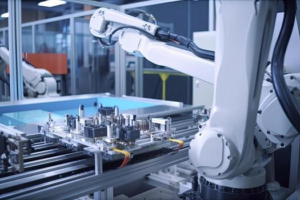
Located in Xinjiang, the factory houses nearly 5,000 automated looms running continuously without direct human oversight. Industrial robots handle material flow, weaving, and quality checks in a tightly synchronized system. This setup not only boosts output but also ensures consistency, highlighting how industrial automation can achieve relentless production cycles.
AI and Real-Time Adaptive Control
The facility’s core intelligence lies in its sensor networks and AI algorithms. These systems monitor variables like yarn tension, weave density, and machine performance in real time. AI control systems then auto-adjust operations to optimize quality and efficiency. Predictive maintenance algorithms further reduce downtime by flagging wear before failures occur.
Author’s Insight: This level of adaptive control represents a shift from programmed automation to cognitive manufacturing. AI doesn’t just execute tasks—it learns and optimizes processes dynamically, which is becoming essential in high-speed, high-volume sectors like textiles.
China’s Strategic Push for Smart Factories
This plant is part of China’s broader “smart factories” initiative, which aims to enhance industrial competitiveness through automation and digitalization. In such facilities, human roles evolve from manual operation to supervision, data analysis, and system management. This transition supports China’s goal of leading in advanced factory automation while addressing rising labor costs and quality expectations.
The Changing Face of Industrial Work
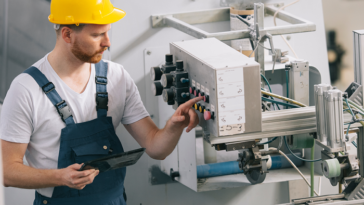
Contrary to the notion of full job replacement, this model transforms rather than eliminates employment. New positions emerge in robotics maintenance, AI supervision, process engineering, and data analytics. The workforce must adapt to more technical, less physically demanding roles—a transition that requires continuous skills development and training in control systems and digital tools.
Global Implications and Competitive Responses
Globally, this automated model attracts both admiration and concern. It offers unbeatable efficiency, shorter lead times, and consistent quality, challenging labor-intensive producers in Asia and beyond. Countries relying on low-cost textile labor may face pressure to automate or risk losing market share. This accelerates a worldwide move toward smarter, more responsive industrial automation strategies.
Author’s Comment: The rise of AI-driven factories isn’t just about cost—it’s about resilience and responsiveness. Manufacturers that integrate AI and robotics can adapt faster to market changes and custom demands, setting a new benchmark in supply chain agility.
Scenario: An Automated Textile Production Line
Challenge: Produce high-volume, consistent-quality fabric with minimal waste and downtime.
Solution: Implementation of an AI-controlled line with IoT sensors, automated looms, and robotic handlers, all integrated via a central PLC and AI dashboard.
Outcome: 24/7 operation with less than 2% defect rate, 30% lower energy use, and the ability to switch product designs through software updates—no physical retooling required.

Frequently Asked Questions (FAQ)
Q1: How does AI improve quality in textile manufacturing?
A1: AI analyzes real-time data from vision systems and sensors to detect defects early, adjust machine settings autonomously, and ensure consistent fabric texture and color across batches.
Q2: What happens to workers in fully automated factories?
A2: Workers are upskilled to higher-value roles such as monitoring AI systems, maintaining robotic equipment, and overseeing production flow—shifting from manual labor to tech-augmented supervision.
Q3: Can small or medium textile manufacturers adopt this technology?
A3: Yes, through modular automation solutions and cloud-based AI platforms. Even partial automation of key processes—like inspection or packaging—can significantly boost efficiency.
Q4: Is predictive maintenance really effective in textiles?
A4> Absolutely. Vibration, thermal, and acoustic sensors help predict loom or spindle failures days in advance, reducing unplanned downtime by up to 50% in some documented cases.
Q5: How does this affect fast fashion and customization trends?
A5: AI-driven factories enable faster switchovers between designs and smaller batch production. This supports faster response to fashion trends and even mass customization without sacrificing speed or cost.
 No products in the cart.