

Unlocking Factory Productivity: How AI Conquers the Final Automation Frontier
The Hidden Hurdle in Smart Manufacturing
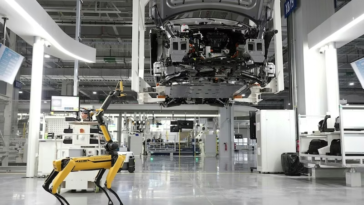
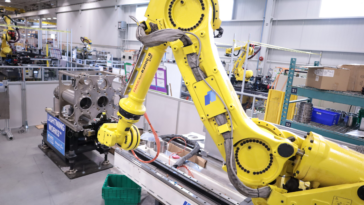
Factories today operate with impressive robotic efficiency. However, a major bottleneck often remains unseen. This challenge exists not on the assembly line, but within administrative workflows. Manual processing of orders, invoices, and email communication creates significant friction. This administrative drag slows down operations and hinders scalability for manufacturers and distributors globally.
From Operational Insight to AI Innovation
The team at Workist, including Co-CEOs Tim Wegner and Alexander Müller and CTO Dr. Fabian Brosig, identified this critical gap. Their Berlin-based company developed a targeted solution. They combine consulting expertise with advanced machine learning and solid engineering. Consequently, they deliver measurable efficiency improvements for industrial clients.
Transforming Data Entry with Intelligent Automation
Workist deploys specialized AI agents to tackle repetitive data tasks. These agents automate key workflows like order entry and invoice reconciliation. For example, they extract information directly from emails and PDFs. Then, they validate and input this data into legacy ERP systems. This process eliminates manual work. Therefore, it reduces errors and accelerates order-to-cash cycles significantly.
Empowering the Workforce for Strategic Roles
This automation liberates skilled employees from mundane data work. As a result, companies can reassign talent to higher-value activities. Teams can focus on business development, customer service, and process optimization. This shift is crucial in a competitive labor market. Moreover, it builds a more resilient and adaptable operation.

Global Validation and Market Expansion
Workist’s participation in the K-Startup Grand Challenge 2025 marked a key milestone. Reaching the Top 40 provided access to South Korea’s sophisticated manufacturing sector. The experience validated their platform in a demanding new market. Korean partners now recognize the Workist brand. This success demonstrates the global relevance of their AI solution for industrial automation.
The Next Wave of Productivity Gains
The integration of AI into administrative tasks represents the logical next step. First, automation revolutionized physical production. Now, intelligent software addresses cognitive bottlenecks. This evolution is critical for modern control systems. Companies leveraging these tools gain a decisive competitive advantage. They achieve faster throughput and better resource allocation.
Real-World Application Scenarios
Streamlined Order Management: An AI agent monitors sales channels continuously. It captures order details from various formats, checks data against inventory, and updates the ERP system automatically. This ensures real-time accuracy without manual intervention.
Efficient Accounts Payable: The system processes supplier invoices intelligently. It matches them with corresponding purchase orders and goods receipts. The AI flags only exceptions for human review. This slashes processing time and improves financial visibility.
Expert Analysis: The Future of Industrial Operations
The true potential of factory automation lies beyond the shop floor. Integrating front-office communication with back-end ERP systems is essential. AI acts as the crucial connective layer. Platforms like Workist show that the next productivity leap comes from software intelligence. This intelligence bridges the gap between business interactions and core operational data. Manufacturers adopting such solutions will lead their industries.

Frequently Asked Questions (FAQ)
Q: What specific processes can Workist’s AI automate?
A: The platform automates data-heavy administrative tasks. This includes processing purchase orders, sales orders, and invoices by extracting data from documents and entering it into ERP systems like SAP or Oracle.
Q: How does the solution handle data security and integration?
A: Workist employs enterprise-grade security with encryption and strict access controls. Its AI agents are designed for non-invasive integration, working alongside existing PLC, DCS, and ERP systems without requiring replacement.
Q: Is this technology only suitable for large corporations?
A: While large enterprises benefit greatly, the scalable nature of AI automation also serves mid-sized distributors. Any business hampered by manual data entry can achieve significant efficiency gains.
Q: What was the key outcome from the Korean startup challenge?
A> The program provided vital market validation and direct engagement with Korean industrial leaders. It accelerated Workist’s understanding of regional needs and established strong local recognition.
Q: How does AI automation impact the existing workforce?
A: It transforms their role. Instead of eliminating jobs, it redirects human expertise towards strategic analysis, customer relations, and complex problem-solving, increasing overall job satisfaction and contribution.

 No products in the cart.