
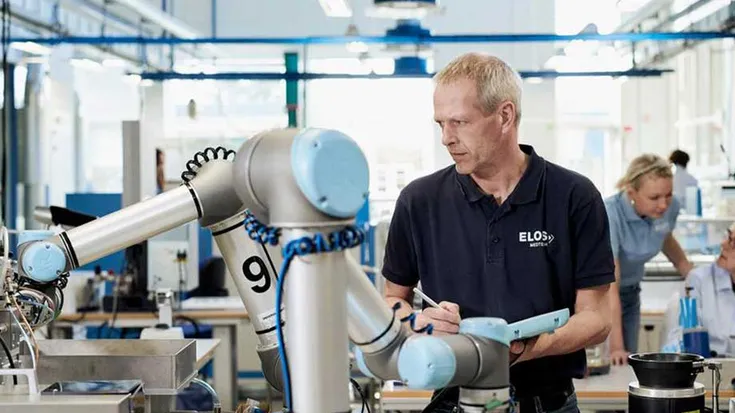
Why Legacy Safety Standards Can’t Keep Pace with Agile, AI-Powered Robotics
The rigid safety frameworks of yesterday are becoming a bottleneck for the flexible, intelligent machines of tomorrow. Here’s why the industry needs a fundamental shift.
The New Frontier: Agile Robotics in Modern Manufacturing
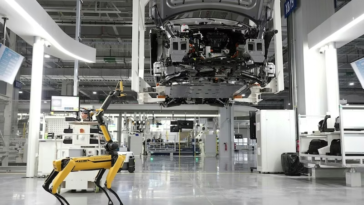
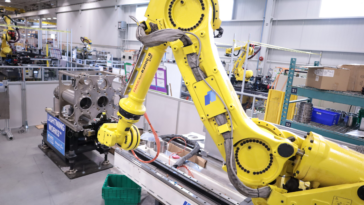
Automation is now the backbone of global industry. It ensures efficiency, quality, and supply chain resilience. The rise of Autonomous Mobile Robots (AMRs) and advanced collaborative robots marks a decisive shift. These are not simple, repetitive machines. They are adaptive systems that navigate dynamic environments and handle high-mix, low-volume production. This inherent flexibility is precisely what strains traditional, fixed-limit safety protocols.
The Critical Flaw in Fixed-Limit Safety Paradigms
Traditional industrial safety was designed for a predictable world. It relied on physical cages, set paths, and emergency stop routines. This model assumes static conditions. However, modern agile robotics operate in flux. They require constant, real-time decision-making. Legacy standards struggle to govern systems where the operational context changes by the minute. Simply put, pre-defined rules cannot manage autonomous, context-aware behavior effectively.
From Reactive Stops to Proactive, Context-Aware Safety
The future of industrial safety is proactive, not reactive. An emergency stop is a failure state. The goal is to prevent the need for one altogether. Next-generation systems must perceive their environment, assess risks dynamically, and adjust behavior preemptively. Imagine an AMR slowing its speed autonomously when approaching a congested aisle or a cobot detecting a misplaced tool. This context-aware safety is an enabler, not a restriction. It allows for higher performance and closer human-robot collaboration by making intelligent, real-time trade-offs.
Essential Tools for Assuring Safe Autonomy
Building this new safety layer requires two key technological foundations. First, Digital Twins and Simulation are indispensable. They allow for exhaustive testing of countless scenarios—from new factory layouts to rare edge cases—before physical deployment. Second, Robust Perception Systems are critical. Sensors and AI must be resilient enough to operate reliably in non-ideal conditions (e.g., poor lighting, dust) without causing unnecessary shutdowns. The objective is graceful degradation, not catastrophic failure.
The Imperative for a Secure Control Foundation
Advanced perception must be built upon a secure control backbone. As systems become more connected and autonomous, safeguarding command integrity and fleet management is paramount. Secure hardware endpoints and centralized management platforms are essential to prevent cyber-physical risks and ensure that safety protocols cannot be compromised.
Author’s Analysis: The Path Forward for Industry Leaders
The industry is at an inflection point. Investment is pouring into robotic hardware and AI, but the safety stack is lagging. Treating safety as a mere compliance checkbox will stifle innovation. Forward-thinking manufacturers must advocate for and invest in dynamic safety architectures. This means partnering with technology providers who embed proactive safety at the control layer and prioritizing standards that accommodate adaptive machine behavior. The competitive advantage will go to those who can deploy agile systems at scale without sacrificing safety or performance.
Practical Solution Scenario: Adaptive Speed Control in a Warehouse
Consider an AMR fleet in a distribution center. Under old standards, robots might have a single, fixed speed limit. A proactive system uses real-time data. Via on-board sensors and fleet coordination software, an AMR identifies increased pedestrian traffic near a packing station. It then autonomously reduces its speed in that zone, maintaining flow without a full stop. This dynamic adjustment, governed by a secure control platform, maximizes throughput while ensuring safety.
Frequently Asked Questions (FAQs)
Q1: What’s the main difference between traditional and proactive safety for robots?
Traditional safety is reactive, relying on physical barriers and emergency stops after a hazard is detected. Proactive safety uses sensors and AI to anticipate and avoid hazards before they occur, enabling continuous operation.
Q2> Aren’t current standards like ISO 13849 enough for new robots?
While these standards provide a crucial baseline, they were largely conceived for fixed automation. They lack specific frameworks for the real-time, context-aware decision-making required by agile, mobile, and AI-driven systems.
Q3: How do Digital Twins contribute to safety?
Digital Twins create a virtual replica of a system and its environment. Engineers can simulate millions of operational hours, test failure modes, and validate safety responses under countless scenarios without risk to physical assets or personnel.
Q4: Can proactive safety actually improve productivity?
Absolutely. By allowing systems to make intelligent adjustments (like slowing down instead of stopping), it minimizes unplanned downtime. It also enables closer human-robot collaboration, unlocking more efficient workflows that were previously unsafe.
Q5: What is the first step a manufacturer should take to modernize their safety approach?
Conduct a gap analysis of current safety protocols against planned agile automation deployments. Then, prioritize partnerships with technology providers whose solutions offer integrated, secure, and context-aware safety capabilities at the control system level.
 No products in the cart.