

The AC Drives Market: Powering Efficiency and Automation Towards a $35.7 Billion Future
The global industrial landscape is undergoing a profound transformation. At the heart of this shift are AC drives, critical components evolving from simple motor controllers into intelligent hubs for energy management and process optimization. A recent comprehensive market analysis forecasts robust growth, with the sector expected to expand from USD 21.28 billion in 2025 to USD 35.70 billion by 2032, representing a steady compound annual growth rate (CAGR) of 7.67%. This trajectory underscores the technology’s escalating role in modern industry.
Key Market Drivers: Beyond Basic Motor Control
Several interconnected factors are propelling this expansion. First, stringent global regulations mandating higher energy efficiency are compelling industries to adopt sophisticated motor control solutions. AC drives are uniquely positioned to meet these demands, often reducing a motor’s energy consumption by 20-30% or more. Moreover, the relentless push towards industrial automation and smart manufacturing ecosystems is integrating AC drives as essential, data-rich components. Consequently, their value is shifting from standalone hardware to integral parts of predictive maintenance and operational intelligence platforms.
Technological Segmentation and Application Diversity
The market’s strength lies in its versatility. Manufacturers offer tailored solutions across key parameters. Voltage options range from low voltage for commercial buildings to medium voltage for heavy industry. Control methods have also specialized; variable frequency drives (VFDs) handle basic speed control, while vector and servo drives deliver precise torque and position control for complex machinery. This segmentation allows precise deployment across diverse sectors, from controlling HVAC systems in residential complexes to managing massive pumps in water treatment plants and synchronizing conveyors in automotive manufacturing.
Regional Dynamics and Strategic Industry Landscape
Growth patterns vary significantly by region. Rapidly industrializing economies in the Asia-Pacific region, led by China and India, present substantial opportunities driven by new infrastructure projects. Conversely, mature markets in North America and Europe focus on retrofitting existing facilities with smarter, more efficient drives to meet sustainability targets. The competitive landscape features established automation giants like ABB, Siemens, and Rockwell Automation, who are increasingly focusing on software integration and service-based offerings. Furthermore, strategic partnerships between drive manufacturers, system integrators, and OEMs are accelerating innovation and deployment.
The Integration of Digital Intelligence
A dominant trend is the digital integration of AC drives. Modern units are equipped with connectivity features and embedded sensors, enabling real-time analytics. This transforms them into valuable data sources on motor health, system performance, and energy usage. Therefore, they form the backbone of Industry 4.0 initiatives, feeding information to higher-level systems for optimized production scheduling and preventative maintenance, thereby minimizing unplanned downtime.

Author’s Insight: The Evolving Value Proposition
The narrative around AC drives is fundamentally changing. While their core function remains speed and torque control, their perceived value is increasingly tied to the data and connectivity they provide. We are moving from a product-centric model to a solution-centric one. For end-users, the decision is less about the drive itself and more about which platform offers the deepest insights and easiest integration into their digital ecosystem. Companies that successfully bundle hardware with advanced analytics and lifecycle services will likely capture greater market share.
Practical Application Scenarios
Water Treatment Plant: Using medium-voltage AC drives on pump stations to precisely control flow based on demand, resulting in major energy savings and reduced mechanical stress on pipelines.
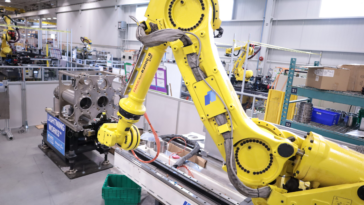
Discrete Manufacturing: Deploying servo drives on robotic arms and CNC machines for high-speed, precise assembly and cutting operations, enhancing product quality and throughput.
Commercial HVAC: Implementing networked VFDs on fans and pumps within a building’s HVAC system, allowing for dynamic adjustment based on occupancy sensors and external temperature, cutting operational costs significantly.

Frequently Asked Questions (FAQ)
Q1: What is the primary benefit of using an AC drive?
A1: The primary benefit is significant energy savings for electric motor-driven systems, often achieving 20-30% reduction by matching motor speed to the actual load requirement.
Q2: How does a VFD differ from a servo drive?
A2: A VFD is best for basic speed control of standard motors (e.g., pumps, fans). A servo drive provides precise control over position, speed, and torque, typically for complex motion in robotics or machine tools.
Q3: Why is digital integration important for modern AC drives?
A3: Digital features enable condition monitoring, data collection, and integration into plant-wide control systems. This facilitates predictive maintenance, energy reporting, and overall operational intelligence.
Q4: Which industry is the largest user of AC drives?
A4: The industrial sector is the largest, especially segments like oil & gas, water & wastewater, power generation, and discrete manufacturing (automotive, packaging).
Q5: What should a buyer consider when selecting an AC drive?
A5: Key factors include the motor’s power rating, required control precision (VFD vs. vector vs. servo), communication protocol needs for integration, environmental conditions, and the availability of local technical support.

 No products in the cart.