
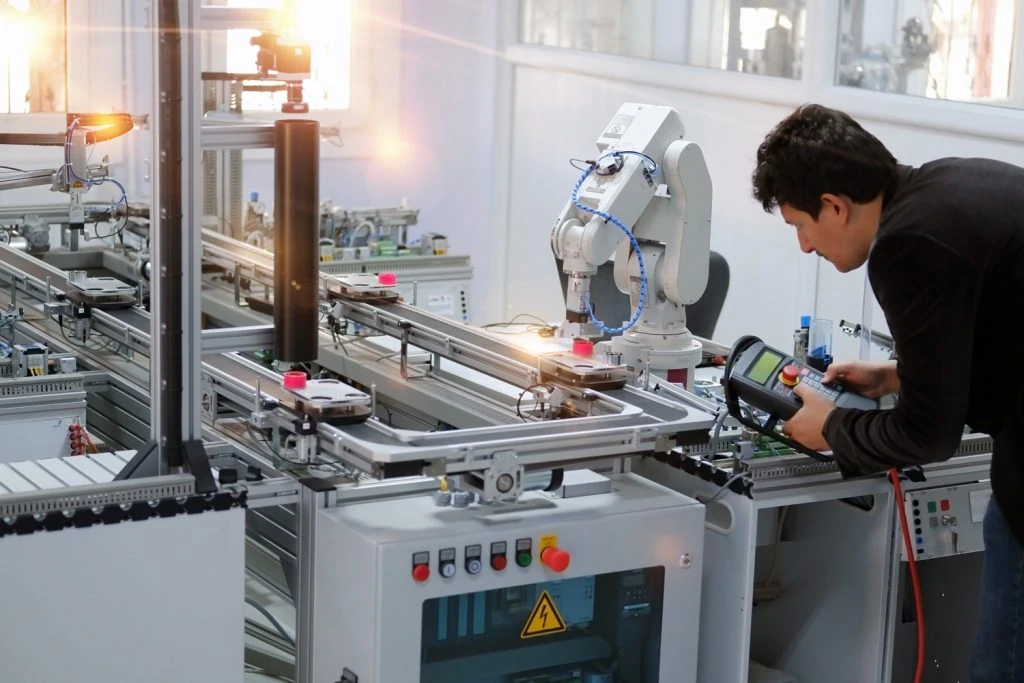
The global landscape of industrial automation and power electronics is shifting rapidly. Driven by demands for smarter and cleaner operations, these sectors are expanding at nearly 9% annually. For Australia, this evolution is creating focused opportunities. Local industries are moving beyond simple expansion, aiming instead for intelligent efficiency and sustainable growth through advanced technology.
Intelligent Systems Evolve with Autonomous AI
Artificial Intelligence is becoming a proactive partner in industry. Modern systems now perform autonomous diagnostics and corrective actions. For example, AI-driven vision can inspect components ten times faster than manual methods. This reduces costly downtime significantly. Moreover, predictive algorithms on edge devices analyze data from motors or turbines to forecast failures. Consequently, sectors like mining and renewables gain crucial foresight. Integrating such intelligence into upgraded control systems offers a cost-effective modernisation path for existing infrastructure.
Power Electronics Advance with SiC and GaN
Wide-bandgap semiconductors like Silicon Carbide (SiC) and Gallium Nitride (GaN) are key to efficiency. They outperform traditional silicon with higher switching speeds and better thermal handling. Therefore, they enable smaller, more efficient power converters for solar farms and industrial drives. Their adoption in electric vehicles and fast-charging stations is growing over 20% yearly. Upgrading existing drives with these materials during a refurbishment can yield double-digit efficiency gains. This directly cuts energy costs and supports sustainability goals.
Adaptive Manufacturing Through Flexible Robotics
Manufacturing flexibility is rising with modular, collaborative robots. These units quickly adapt to new tasks, allowing factories to change production without major overhauls. Powered by efficient GaN-based drives, they safely work alongside staff. Private 5G networks provide the real-time data and control needed for coordination. In warehouses, AI-guided autonomous mobile robots (AMRs) dynamically optimize logistics paths. To leverage this, maintaining core PLC systems from providers like Siemens or ABB is essential. They must capably orchestrate these new robotic teams.
Securing Connected Industrial Operations
The Industrial Internet of Things (IIoT) connects billions of sensors and drives, enabling predictive insights. However, this connectivity expands cyber attack risks. Modern standards now mandate built-in security for all networked control systems. Secure edge nodes process data locally for fast response. Additionally, encrypted communication over 5G networks protects data integrity. For plant managers, cybersecurity must be a core consideration in any upgrade. Ensuring refurbished components meet latest protocols safeguards the entire operational technology network.
Sustainability Drives the Circular Industrial Economy
Environmental responsibility is now a central industrial strategy. The circular economy model, focusing on repair and refurbishment, is gaining momentum. Extending the life of high-value equipment like VSDs and PLCs conserves resources and reduces electronic waste. Professionally refurbishing a drive with updated components can cost 40-60% less than a new unit. It often delivers comparable performance and reliability. This approach is both economically and environmentally smart. It supports Australia’s clean energy transition by integrating upgraded converters into solar and battery storage projects.
Strategic Modernisation for Australian Industry
The convergence of AI, advanced hardware, and connectivity charts a clear course. Australian plant managers can gain a competitive edge by strategically upgrading existing infrastructure. This involves integrating AI analytics, adopting efficient wide-bandgap semiconductors, and ensuring robust IIoT security. Partnering with certified specialists for component-level repair and modernisation is a smart strategy. It combines proven hardware reliability with the advanced capabilities needed for 2026’s smart factories.
Practical Application Scenarios
Mining Sector: Implementing AI predictive maintenance on critical conveyor drives to prevent unplanned stoppages, using secure edge computing for real-time vibration analysis.
Renewable Energy: Retrofitting existing solar inverter stations with high-efficiency SiC power modules to increase energy yield and reduce thermal stress, supported by refurbished control systems.
Food & Beverage Manufacturing: Deploying collaborative robots for packaging line changeovers, controlled by upgraded PLCs communicating over a private wireless network for flexible production.
Frequently Asked Questions (FAQs)
Q1: What are the main advantages of using SiC/GaN in existing equipment?
A1: The core benefits are superior energy efficiency and thermal management. Retrofitting these semiconductors reduces power loss, lowers cooling needs, and extends equipment life, offering a strong return on investment.
Q2: Can AI truly fix industrial equipment problems without human help?
A2: Advanced AI can diagnose specific faults and execute pre-defined responses. For instance, it might adjust parameters, activate a backup system, or start a safe shutdown, all while alerting technicians with detailed reports.
Q3: Is connecting old equipment to the IIoT a security risk?
A3: Security depends entirely on the implementation. A professional upgrade must include encrypted communication modules, integrate the device into the plant’s security framework, and guarantee regular firmware updates.
Q4: Why consider refurbishment instead of purchasing new hardware?
A4: Refurbishment offers major cost savings (40-60%), drastically shorter lead times, and clear sustainability benefits. Certified providers use high-grade parts and offer strong warranties, often adding modern features like data connectivity.
Q5: How do these trends help Australia’s mining and renewable sectors specifically?
A5: In mining, AI prevents costly downtime through predictive care of vital equipment. In renewables, high-efficiency converters maximise solar energy harvest. Both sectors benefit from rugged, upgraded electronics that suit harsh, remote environments.
 No products in the cart.